We’re excited to share that IDAEA-CSIC has officially begun mesocosm studies as part of the ONE-BLUE project! This marks a significant step toward our goal of advancing understanding of how climate change (CC) and contaminants of emerging concern (CECs) interact within marine ecosystems.
But what exactly is a mesocosm? In scientific research, a mesocosm is a controlled outdoor environment that mimics natural ecosystems, allowing researchers to closely observe the effects of various conditions. By controlling the inputs, scientists can identify cause-and-effect relationships in a way that would be difficult to achieve in the wild.
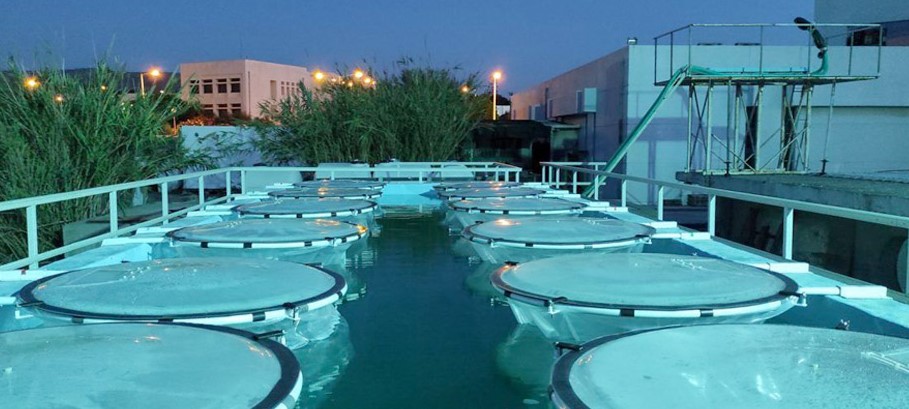
Through the ONE-BLUE project, we aim to use mesocosm studies to examine the impact of climate change drivers—such as temperature, salinity, and pH—on marine organisms exposed to CECs. CECs concentrations in our studies are based on the substances most frequently detected in the environment, ensuring relevance to real-world scenarios.
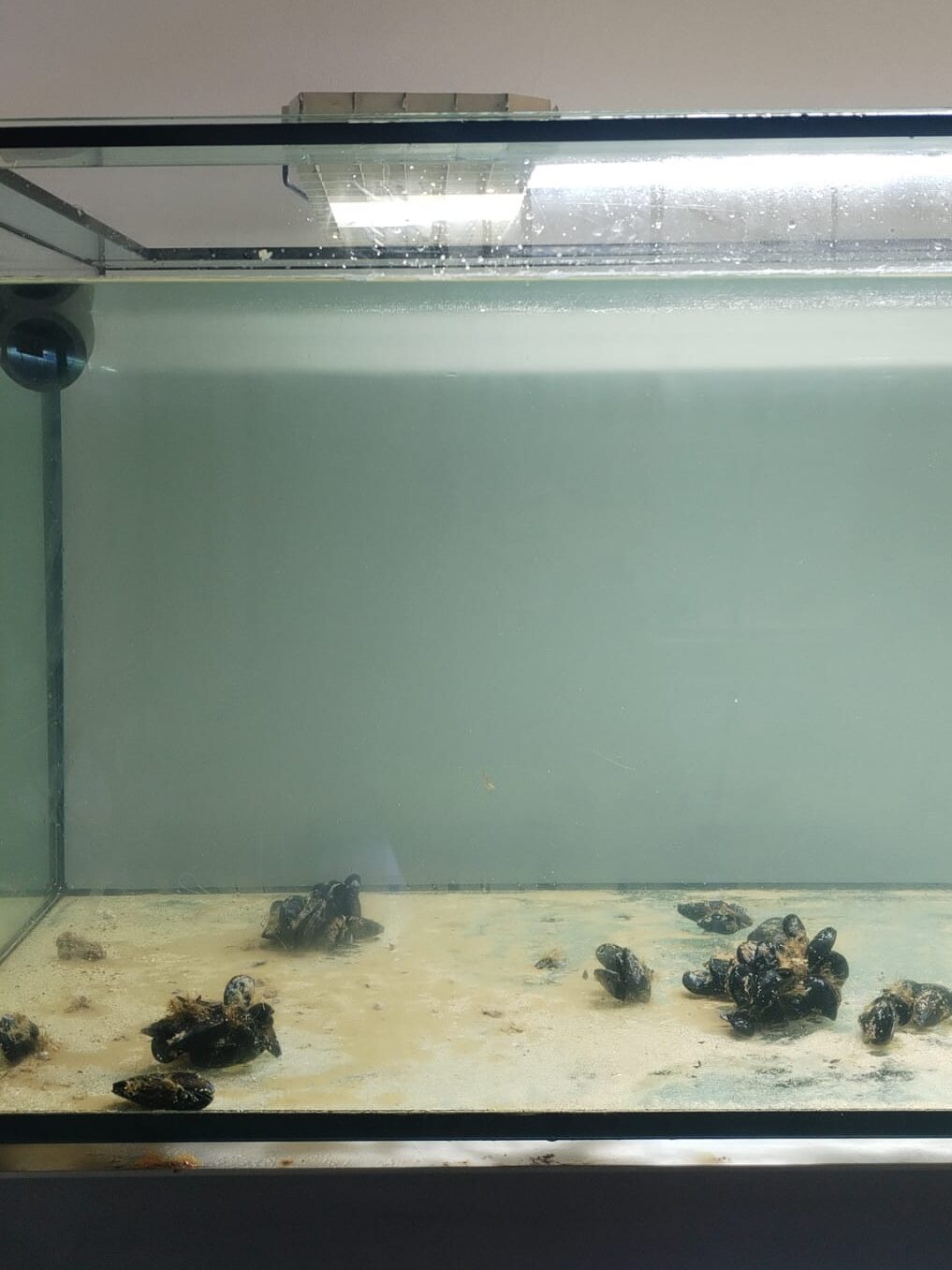
Three project partners—IDAEA-CSIC, ICM-CSIC, and HCMR—are collaborating on these experiments at their own specialised mesocosm facilities. Last October, IDAEA-CSIC launched its mesocosm studies with mussels as the initial test organisms.
Once the results of these experiments are available, they will be shared widely to help us better understand the interactions between CC and CECs.